Career
Videos That Helped Me Get Hired
The changes I made so recruiters could find me, screening calls became useful practice, and interviews felt more like working sessions.
The changes I made so recruiters could find me, screening calls became useful practice, and interviews felt more like working sessions.
I recently got a good job offer. I didn’t get it by carpet-bombing every job board with the same résumé and hoping somebody eventually developed poor judgment. I got it by changing how people found me, how I handled the first call, and how I behaved once I was in the interview.
I stopped applying for jobs entirely. I never submitted another application after making this change. Every opportunity came through a recruiter, and it worked really well for me.
The process was taking all of my time. Filter the listings. Figure out whether one is still real. Adjust the résumé. Fill out a form that asks for everything already on the résumé. Wait for the automated rejection. Repeat until bedtime.
Only half the companies I applied to responded, and none of them would explain why they turned me down. This is where recruiters have a massive advantage. A company who hires a recruiter is incentivized to tell the recruiter what they liked and didn’t like in a candidate. And recruiters have an incentive to share that information with me.
So I moved that effort to the other side of the process. I made myself easier for recruiters to find, then used the calls I received as feedback. ↓ Farah Sharghi’s LinkedIn video helped me understand what recruiters were actually searching for: a role, location, skills, tools, industries, and employers. I rewrote my profile around the words they would use, without turning it into a sack of keywords wearing a headshot.
Once the calls started, I paid attention to the jobs they brought me. If the roles were close but wrong, I changed a few words in my headline, About section, or skills. Then I waited to see what changed. That gave me something applications never had: a feedback loop.
Other people have had good results applying directly. I’m not claiming applications don’t work. But for me, the no-apply method was clutch: recruiters brought me steady opportunities, every call gave me practice, and one eventually became the offer.
LinkedIn got me into a search result. It still had to give the recruiter a reason to stop.
I rewrote my About and Experience sections around results instead of duties. The goal wasn’t to recite every technology I’ve touched. It was to make three things obvious: what kind of problems I solve, who I solve them for, and what changed because I was there.
I also turned on Open to → Finding a new job, filled in the roles and locations I wanted, and set Visibility → Recruiters only. I wanted to drive recruiters to me while keeping a business-as-usual look to my LinkedIn page.
Then I gave people somewhere else to go. For me, that was a personal website. It didn’t need to be a grand monument to my career. It needed to be a reliable place where someone could learn what I do, see a little evidence, and find my résumé, phone number, and email.
That landing page could be a website, a YouTube or Instagram channel, or a Linktree. The format matters less than the job it does. Someone who is already interested shouldn’t have to go digging for the next reason to call you.
Recruiter calls and employer interviews require two different frames of mind. With an employer, I drive the conversation toward the problems they need to solve. With a recruiter, I play tennis (batting back their questions with straight answers). I stay compliant with their process, helpful, and to the point.
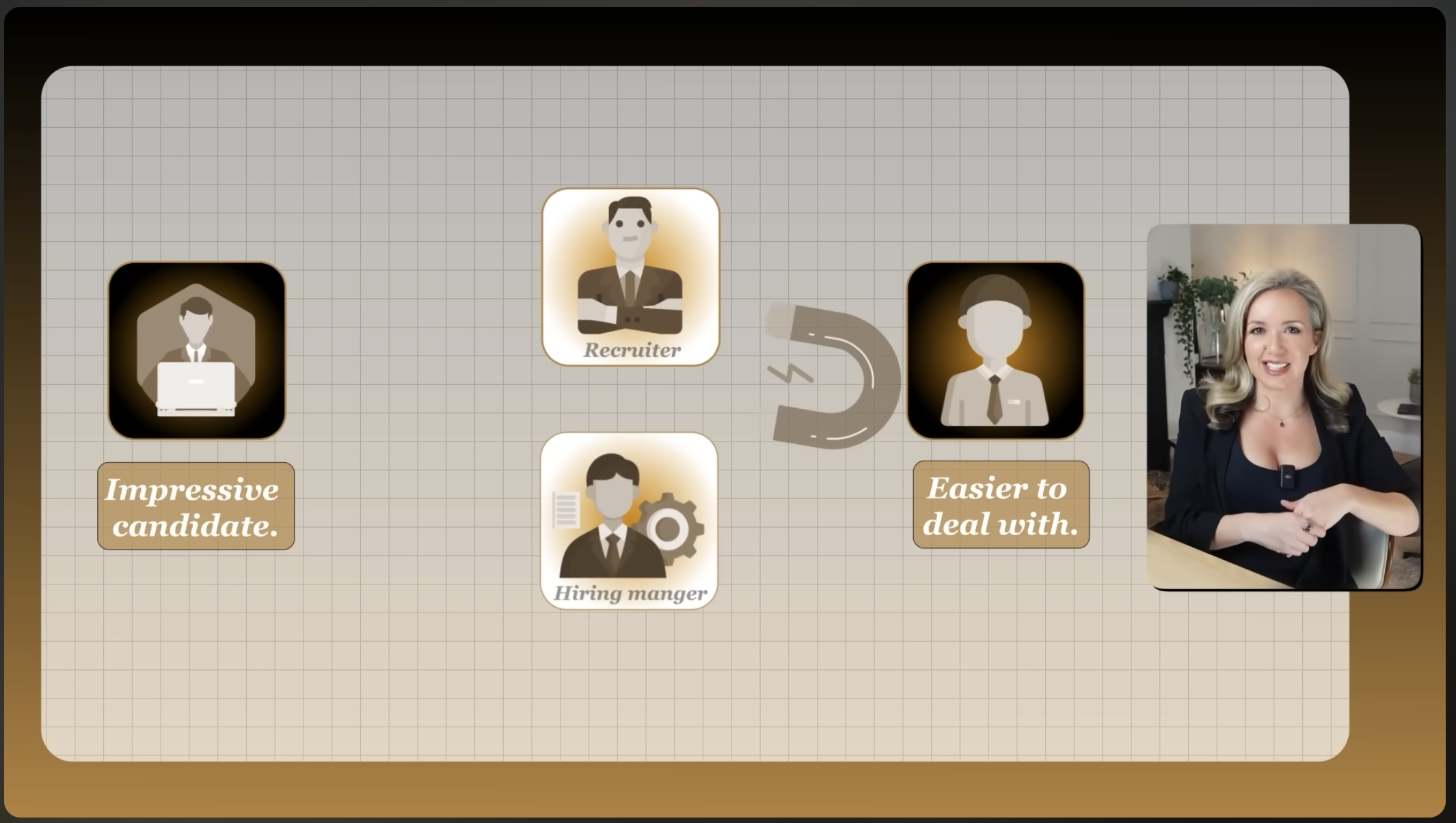
The employer is deciding whether to let you into the company. The recruiter is trying to get a viable candidate through the process. By the time a recruiter calls, they have already seen something they like. They would prefer for you to be the answer because that lets them finish the job they were hired to do.
↓ Lucy’s video about the psychology of hiring helped that click for me. By the time a recruiter calls you, they’re already making a bet on you, and they want you to win. They aren’t waiting for a dazzling performance. They need clear answers, steady energy, and enough evidence to feel good about putting you in front of the employer.
Each recruiter also has filter questions, and here it’s important not to ramble. A classic example is that I use about five different AIs: Codex, Cursor, Claude, Gemini, Perplexity. When a recruiter asks for my favorite AI I learned they’re only asking if I use Claude, so telling them about the others was confusing them. It took me a few calls to learn to detect these questions, but I got the hang of it.
About one recruiter in five asked this, and nearly every employer did. I stopped improvising it.
I begin with the 20-word business-card idea from ↓ Rebecca Okamoto’s talk:
I help small teams solve complex problems without compromising their personal goals.
That sentence isn’t my entire history. It tells the listener how to understand the history that comes next.
Then I use the chronology I learned from ↓ Bill’s interview advice. I walk through the parts of my résumé that matter to this role. I don’t explain every job I’ve had. I show how one relevant choice led to the next.
I also answer the question they are going to ask later: why am I leaving, or why did I leave? I end the chronology with what I want to grow into, such as working with larger teams, learning a new industry, or doing more with AI. Then I use Bill’s simple landing: “And that’s what brings me here today.”
The recruiter version is shorter because they usually don’t know the company’s business problems in much detail. With an employer, I connect the same history to the work they need done. Same person, same facts, different listener.
I don’t go into an interview as if I’m competing with the other candidates for a job. That frame puts all of my attention on saying the right things and getting picked. Based on ↓ Lucy’s advice to act like a consultant, I imagine I’m a consultant or an employee who is already responsible for helping solve a problem.
With that frame in mind, I drive the conversation. I tell them what I want us to accomplish in the meeting and how I’d like to structure it, while keeping the focus on what they need and how I can help.
When they ask me to tell them about myself, I give them the introduction and chronology above. I ask what problem they’re trying to solve and what they’ve already done to solve it. Once they describe the problem, I start strategizing with them right there in the interview.
This helps answer other questions: What’s the job about? Why are they hiring now? Is this a new initiative, or are they backfilling a role? It also gives me a better idea of what I’m getting into: How do they respond to questions? Are they collaborative, combative, progressive, or scattered? What if the role isn’t right for me? As a bonus, it lets the employer see how I think and gives them confidence that I’m ready to start helping with the problem.
It’s also important to know what not to say. In ↓ Sharghi’s video, she explains that being too honest can confuse employers. Why don’t you have a lot on your resume, why did you leave your last job, etc. When I answer, I try to always frame the positive.
These are the videos I would start with. You don’t need to memorize them all at once. Watch for one useful change, put it into practice, and come back for another when you need it.
Farah Sharghi · 6 minutes
Sharghi shows what recruiters see and how they search. Use the terms recruiters search for, then describe results that give them a reason to keep reading.
Rebecca Okamoto at TEDxNorthwesternU · 10 minutes
Okamoto gives a simple formula for explaining what you do: “I help [people] achieve [a result].” It gives the listener a clear starting point and earns the next question.
The Companies Expert · 5 minutes
Bill gives the chronology I use after my short introduction. Walk through the parts of your history that matter to this role, explain what you want to grow into next, and land on why that path brought you into this meeting.
Career Growth With Lucy · 12 minutes
By the time a recruiter calls, they have already found a reason to bet on you. Lucy’s six principles helped me make that bet easier: answer clearly, bring steady energy, and give them evidence they can confidently take to the employer.
Farah Sharghi · 6 minutes
This reframes the interview around why the role exists. The company has a problem or goal, and the hiring manager is trying to decide whether you can help without creating a new problem along the way.
Career Growth With Lucy · 13 minutes
Lucy explains the consultant frame directly. Answer what the interviewer asks, then learn enough about the business to understand why the role exists and which parts of your experience matter.
Farah Sharghi · 12 minutes
Sharghi shows how to frame honest answers around what matters to the role. Focus on what you’re moving toward, leave irrelevant baggage out of the answer, and claim the work you actually did—even when your official title undersold it.