Career
Six Videos That Helped Me Get Hired
A practical watch list for making recruiters find you, handling the first call, and interviewing like someone they already want to hire.
A practical watch list for making recruiters find you, handling the first call, and interviewing like someone they already want to hire.
I recently got a good job offer. I didn’t get it by carpet-bombing every job board with the same résumé and hoping somebody eventually developed poor judgment. I followed advice from several videos, rewrote how I presented myself, and practiced how I would handle the conversations.
These are those videos.
They aren’t six versions of the same interview tips. Together, they cover the whole trip: make your LinkedIn profile easy for recruiters to find, give them a reason to keep reading, handle the first call, explain what you can do, and turn the interview into a conversation about the company’s problems.
Watch them in this order if you’re starting from scratch. More importantly, do the work after each one. Watching career videos without changing anything is just professionally themed Netflix.
Farah Sharghi · 6 minutes
This was the part that let me stop applying for jobs. Once my LinkedIn profile was set up properly, I started getting about one recruiter call a week.
Sharghi explains that recruiters search by combining a role, location, skills, tools, industries, and employers. Use the terms they would actually search for in your About, Experience, and Skills sections, then give them a reason to stop by describing results instead of listing duties. She also covers keeping your public activity professional: recruiters can see the argument you had with a stranger at 1:14 a.m..
One setting I would add is Open to → Finding a new job. Fill in the roles and locations you want, then set Visibility → Recruiters only. This avoids the public #OpenToWork photo frame. LinkedIn tries to hide the signal from your current company, but it can’t guarantee complete privacy.
Once the calls start, use them as feedback. Pay attention to the positions recruiters bring you. If they are close but not quite right, change one or two words in your headline, about section, or skills, then see how the next few calls change. Small adjustments make it easier to tell which words are steering recruiters toward which jobs.
Not every call will be worth taking. The important part is that the job search starts coming to you.
Rebecca Okamoto at TEDxNorthwesternU · 10 minutes
This is the cure for freezing or unloading your entire work history when someone says, “Tell me about yourself.”
Okamoto learned the hard way that a complete list of qualifications isn’t a good introduction. The listener is trying to figure out what you can do for them. Your first sentence only needs to earn the next question.
Her basic formula is:
I help [the people I serve] achieve [the result they want].
You can make it more specific by adding the problem you remove:
I help [the people I serve] achieve [the result they want] without [the usual cost or frustration].
If you’re changing careers, early in your career, or driven more by a mission than a job title, she gives three other starting points:
Write several versions because the right introduction depends on who’s listening. The goal isn’t to cram your life into 20 words. It is to say something clear enough that the other person asks, “Tell me more.”
Career Growth With Lucy · 12 minutes
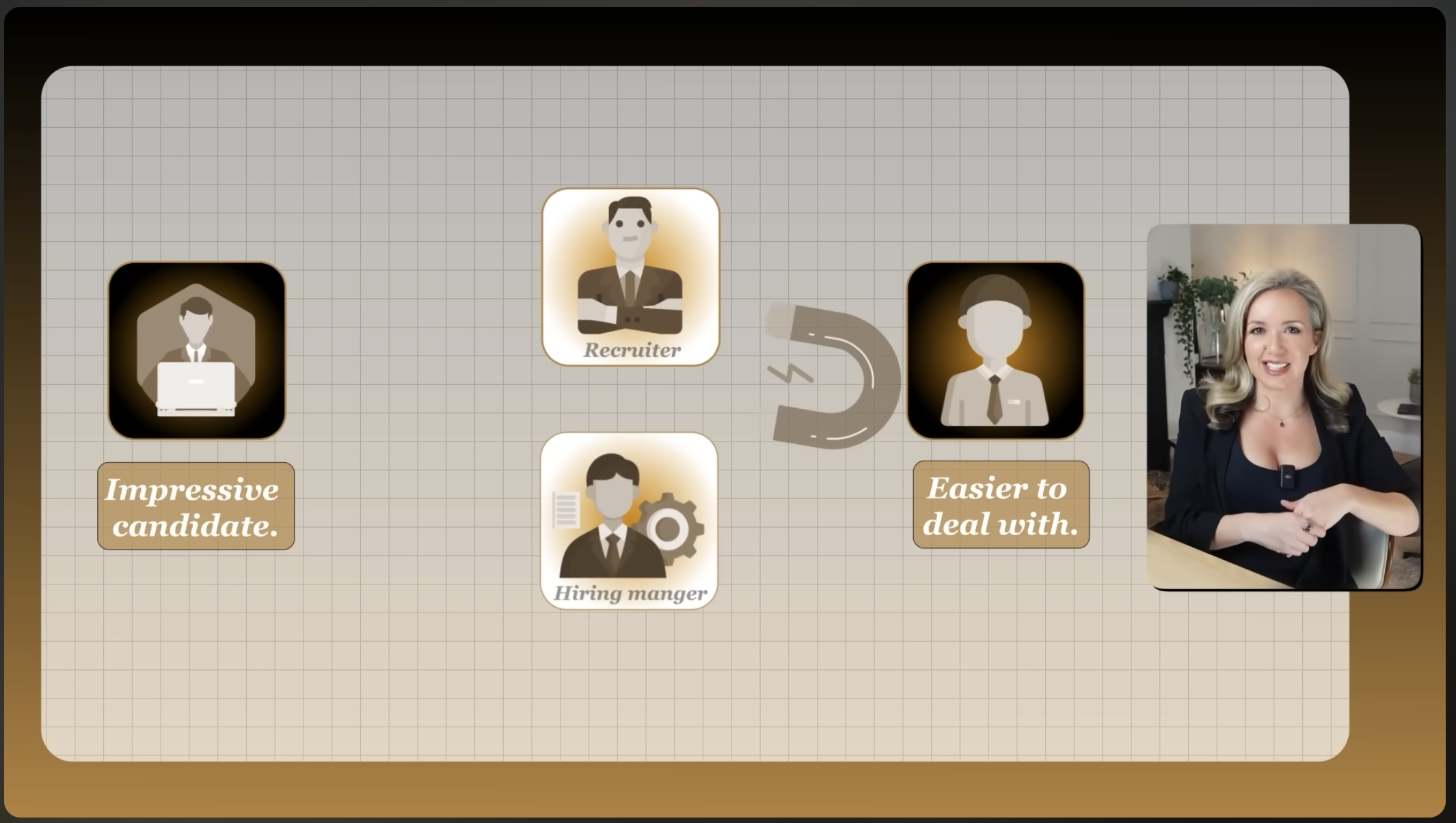
This video made the recruiter call feel less like a trap. By the time a recruiter talks to you, they have already seen something they like. They are busy, the open role is still a problem, and they would very much like you to make their job easy by being the right person.
Lucy explains that through six ideas:
The percentages and sweeping promises in the video are sales copy, not laws of psychology. The useful point is simpler: the person on the other end is human. Don’t make them decode you, manage your frustration, or guess whether you want the job. Be clear, interested, and easy to work with.
Farah Sharghi · 6 minutes
Sharghi’s main point is that the interview isn’t a trivia contest. The company has a problem, the role exists to help solve it, and the hiring manager is trying to decide whether you are a low-risk way to get the outcome.
She gives eight rules for showing that:
You don’t need a number in every sentence. Some good work is hard to reduce to a percentage without making one up, and made-up precision is still made up. Bring numbers where they are real. For everything else, be specific about the before, your decision, and the result.
Career Growth With Lucy · 13 minutes
Most candidates wait for a question, answer it, and wait for the next one. Lucy argues that more senior candidates use the interview to diagnose. They ask what is going wrong, why it is happening, and what success would look like. Then they connect those answers to problems they have solved before.
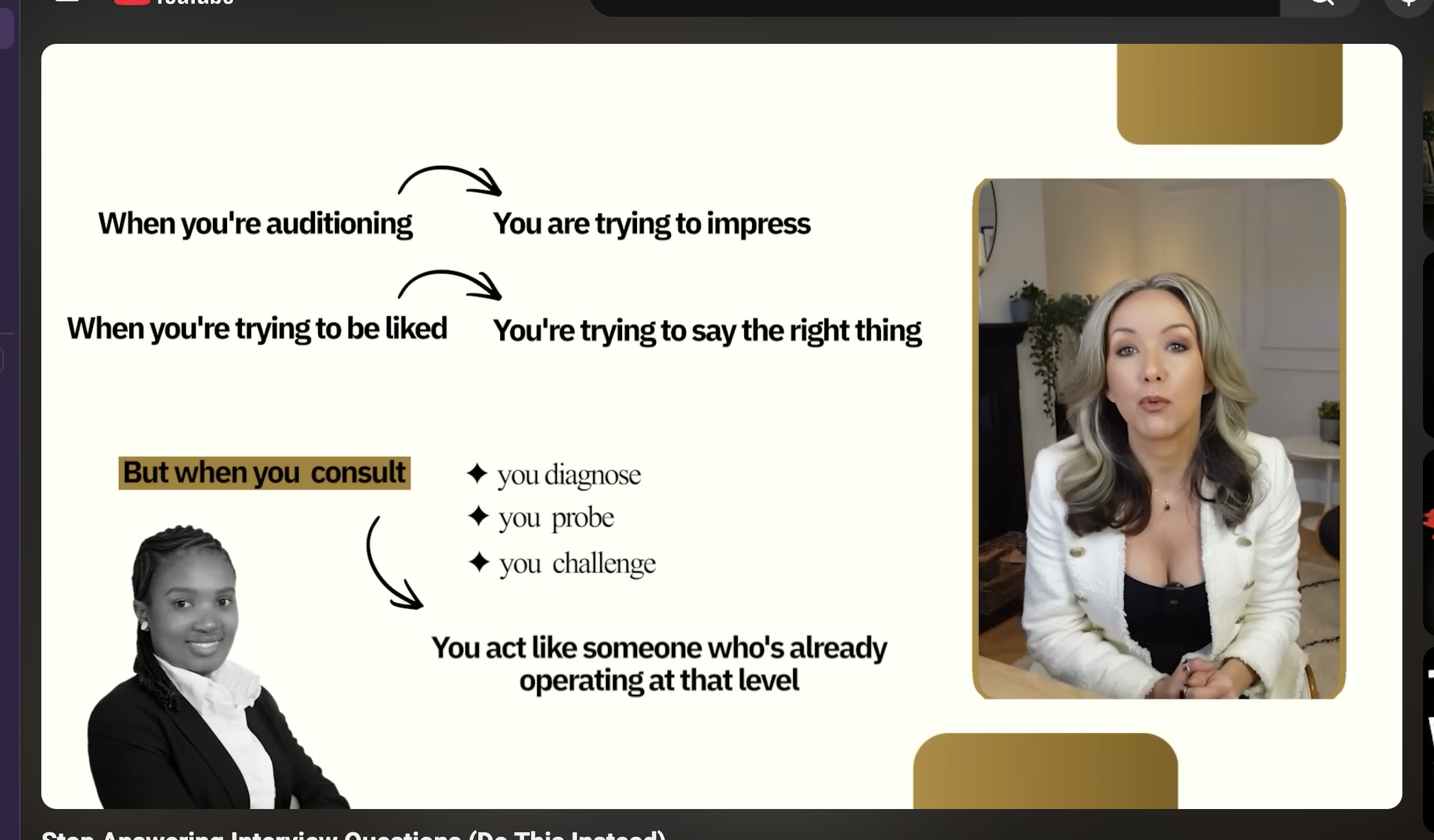
The video builds this in three levels:
That last technique is called elicitation in the video. It also covers bracketing a likely number and using mild disbelief to invite more detail. Practice it in ordinary conversations first. Used naturally, it sounds like a senior person checking their understanding. Used badly, it sounds like you watched a video about CIA tricks the night before your interview.
The point isn’t to dodge every question or manipulate the interviewer. Answer what they asked. Then be curious enough to understand the work and confident enough to decide whether the job is right for you too.
Farah Sharghi · 12 minutes
The title is intentionally provocative. The advice isn’t to lie about your experience, title, or plans. It is to stop volunteering information that creates doubt without helping the interviewer evaluate your work.
Sharghi walks through nine common moments:
Some details depend on the job and on what matters to you. If remote work is a hard requirement, for example, hiding it until the end can waste everybody’s time. Strategic framing means choosing the relevant truth. It doesn’t mean letting a YouTube title talk you into actual lying.
Don’t try to memorize six videos. Build a small set of things you can use:
You do not need to become a different person. You need to make it easy for a recruiter and a hiring manager to see the useful parts of the person who is already there.